Resources
An Elevator Installed in Place of a Spiral Staircase
We install in Houston, Austin and San Antonio, Texas. Out of state? Your local VA office can point you to an installer.

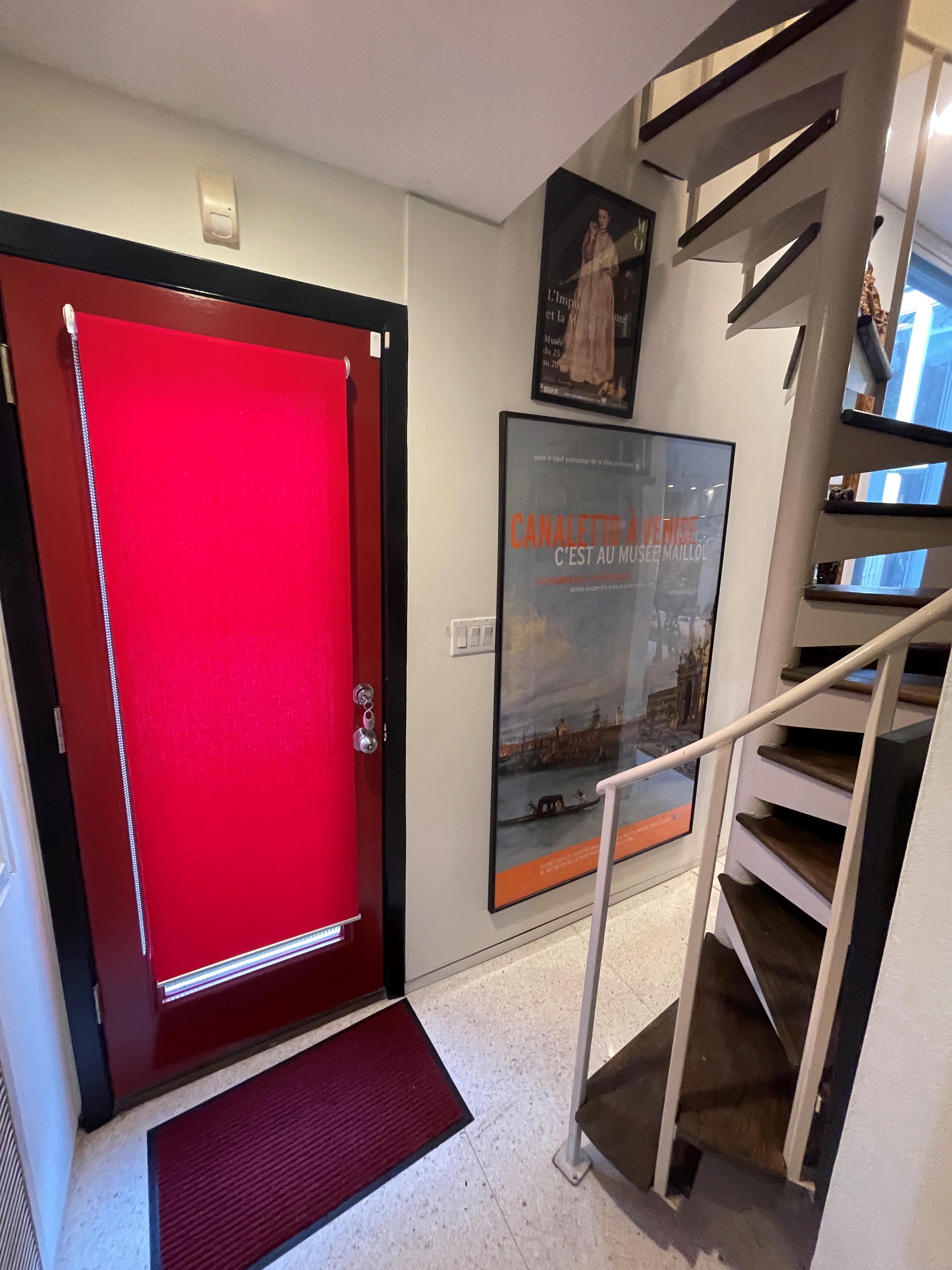
Stairs are the hardest thing about staying in a two-storey home as you get older, and a spiral staircase is the hardest kind of stairs. It is steep, it is narrow, and it was never built with a fall in mind. This Houston family asked us to replace their spiral staircase with an elevator, and we put a through-the-floor elevator in the exact spot where the stairs had stood. Here is how it went, and what it would take to do the same in your house.

Why a spiral staircase is the first thing to go
A spiral staircase saves floor space by winding tightly around a post. That is exactly what makes it dangerous later in life. Each tread tapers to almost nothing at the centre, so there is one safe place to put your foot and it moves with every step. There is no landing to rest on. There is a handrail on one side only, which means one hand free, and that hand is usually carrying something: laundry, a cup of coffee, a grandchild.
It becomes the staircase people quietly stop using. When that happens, a whole floor of the house goes with it. The bedroom, the bathroom, the room with the best light. A stairlift is not the answer here either, because a stairlift needs a straight or curved staircase to ride on, and a spiral has neither. Our post on elevators versus stairlifts goes into that choice. Here, the spiral staircase had already made room for the elevator.
What a through-the-floor elevator is
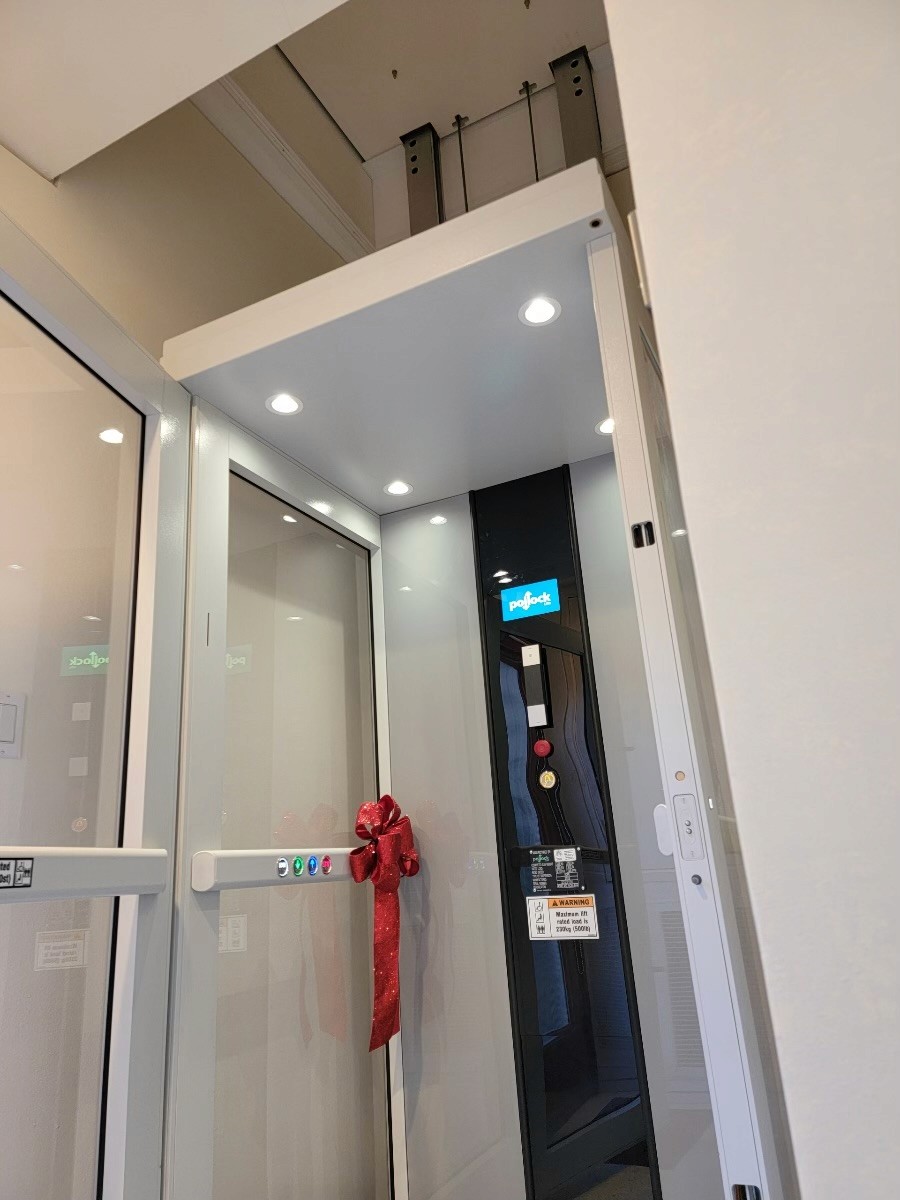
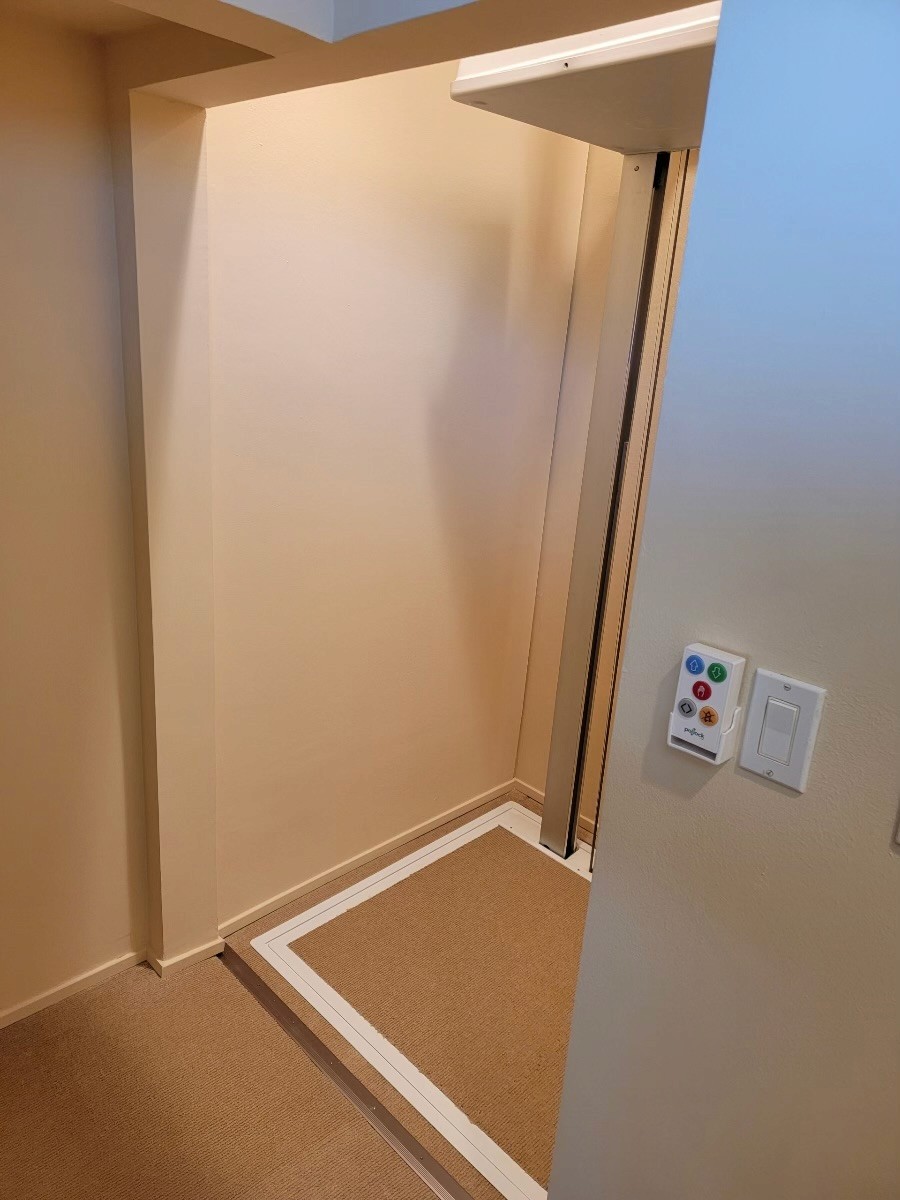
A through-the-floor elevator is a small cab that travels between two floors through an opening in the floor itself. There is no shaft and no machine room. It is free-standing, so it does not need a wall to lean on, and it has the smallest footprint of any elevator you can put in a home. It carries two people, and you do not have to get off a walker or out of a wheelchair to ride it.
When the cab is upstairs, the space it left downstairs is simply floor again. When it is downstairs, the same is true upstairs. For most homes it takes less room than the staircase it replaces, which is the whole reason this job worked. There is more on how they work in our post on through-the-floor elevators.
What this job involved
We took the spiral staircase out. We opened and framed the floor where it had stood, so the elevator could travel through the same spot. We installed the elevator and its rail. We finished the surround on both floors to match the rooms around it. Then the elevator was inspected and handed over to the family.
The before photos show the staircase. The after photos show what replaced it. The house around it did not change.


What it costs, and who can help pay
Every house is different, and the honest answer on price comes from seeing yours. A free in-home assessment in Houston, Austin or San Antonio gives you a written figure for your home, itemised by labour, materials, permits and inspections, with before photos, on the letterhead of a licensed, bonded and insured Texas contractor. That is the form most funding programs ask for.
If you are a veteran, the VA's HISA grant can pay up to $6,800 toward a prescribed home change if your disability is service-connected, or non-service-connected with a rating of 50 percent or more, and up to $2,000 for other non-service-connected disabilities. The Specially Adapted Housing and Special Home Adaptation grants go much further for those who qualify. Some Texas Medicaid waiver programs and the Amy Young Barrier Removal Program can help households that are not veterans. Our Who Pays page walks through each one, and we prepare the estimate and documents in the form your program needs.
Who this suits
A two-storey home where the stairs are the only thing standing between you and staying put. A spiral or steep staircase that nobody likes using. An upstairs bedroom or bathroom that is being avoided. Anyone using a walker or wheelchair who still wants the whole house. Veterans with a service-connected disability, for whom the VA may pay a good part of the cost.
Questions people ask
Can an elevator go where a spiral staircase was?
Yes. That is what this job was. The opening a spiral staircase leaves behind is close to what a through-the-floor elevator needs, so the elevator often fits exactly where the stairs were.
How much space does a through-the-floor elevator need?
Less than any other home elevator, and in this case less than the staircase it replaced. There is no shaft and no machine room. The assessment confirms the fit for your floor plan.
Can I use it with a walker or wheelchair?
Yes. You ride it without getting off your mobility device, and it carries two people.
Does LiveWell handle the permits and inspection?
Yes. LiveWell Mobility and Modifications is a Licensed Texas Elevator Contractor, licence #20399, insured and bonded. Permits and inspections are itemised in your estimate and we handle the paperwork.
Wondering what one costs? Read our guide to home elevator cost: what is included, what moves the price, and the starting price in Houston, Austin and San Antonio.
Want this done at your house?
Free in-home assessment in Houston, Austin and San Antonio — no obligation.